Learning strategies that fit you
Together we find learning strategies that work for you, with extra time to work through hard material and explanations from a different angle until it clicks. We go at your pace.
For medical, PA and nursing students with learning disabilities and other disabilities
One-on-one support to help you get through your program: learning strategies that fit you, notes in the format you need, and a guide through disability resources and accommodations.

Example support plan
Illustrative only. Every plan is built around you. Confidential. No diagnosis needed. Free intro call.
These are common places to get stuck. You don't have to figure them out alone.
You're heading to the wards and aren't sure how your accommodations apply there.
You have them on paper, but you still need different ways to learn and more support.
You're worn down from searching for support in a system with limited resources.
The material arrives in one format and your brain needs another.
Use one, or combine them. You decide what you need and when.
Together we find learning strategies that work for you, with extra time to work through hard material and explanations from a different angle until it clicks. We go at your pace.
Your course material turned into specialized notes: outlines, plain-language summaries, audio-ready scripts, visual maps, high-contrast or large-print layouts.
Understanding the disability resources and accommodations available to you, and how to advocate for your needs with your program, faculty or disability services office. You decide what gets shared.
Pick a format to see how one short topic changes shape. This is an illustrative example.
Topic: heart failure (example)
Heart failure is a clinical syndrome in which the heart cannot pump enough blood to meet the body's metabolic needs, or can do so only at elevated filling pressures. It is commonly classified by ejection fraction: reduced (HFrEF), where the ventricle contracts poorly, and preserved (HFpEF), where the ventricle is stiff and fills poorly. Typical symptoms include dyspnea, fatigue and peripheral edema.
Heart failure does not mean the heart stops. It means the heart isn't pumping as strongly as the body needs.
In one type, the heart muscle is weak. In the other, the heart is too stiff to fill well.
Either way, people often feel out of breath and tired, and their legs may swell.
Here's the big idea. Heart failure doesn't mean the heart has stopped. It means the heart isn't pumping blood as well as the body needs. Think of a pump that can't keep up with demand.
(pause)
Now, two main types. In the first, the heart muscle is weak, so the squeeze is reduced. In the second, the heart is stiff, so it doesn't fill well, even though the squeeze looks normal.
(pause)
What does a patient notice? Shortness of breath, tiredness, and swollen legs.
Heart failure: the heart isn't pumping as strongly as the body needs.
Two types: weak heart muscle, or a stiff heart.
Signs: short of breath, tired, swollen legs.

Concrete things you can use right away, not just advice.
Tell me about your program and what's getting in the way. You don't need to share a diagnosis.
Together we choose your formats, pace and priorities, and map the accommodations you may want to pursue.
Study sessions, adapted materials and help with the paperwork, adjusted as your program changes.
No long commitments. Start with a conversation.
Before we talk about anything personal, you'll know exactly how your information is handled.
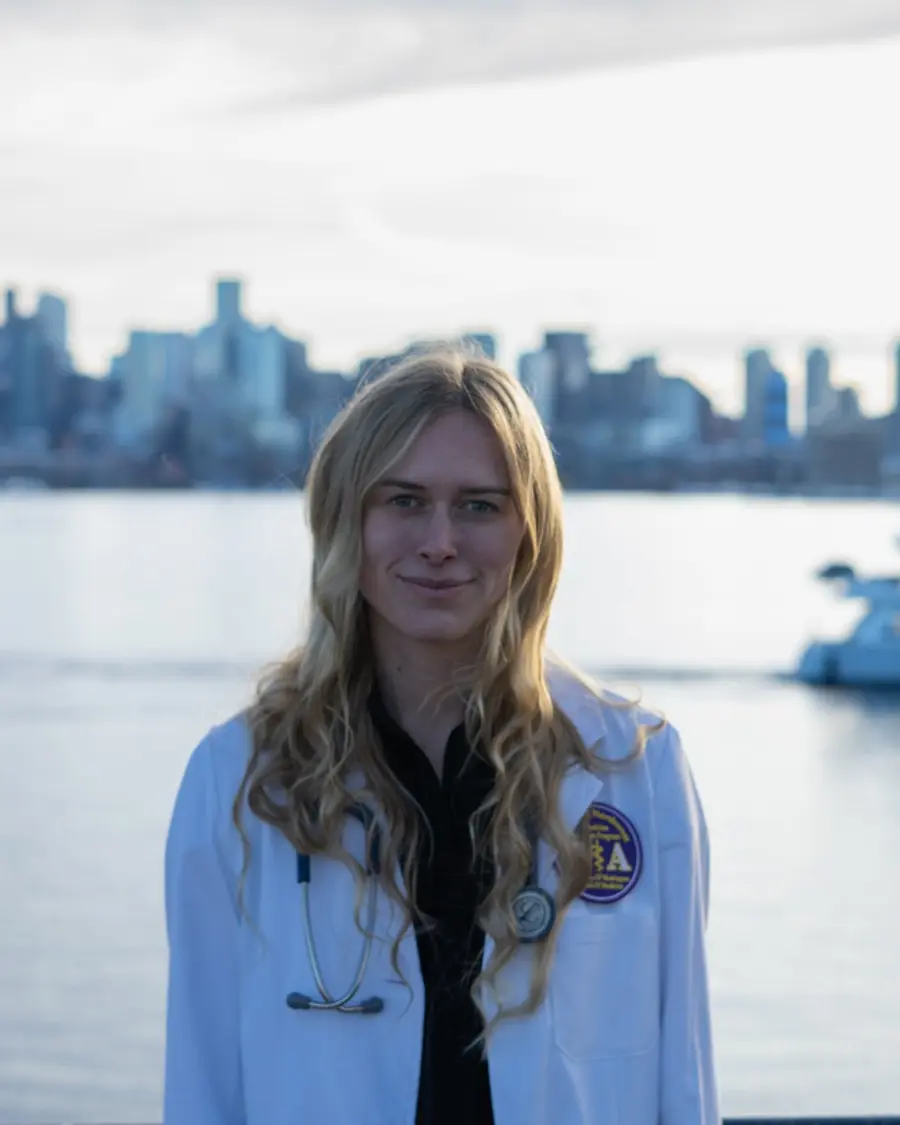
The education system isn't always built for people who learn and think differently. Needing more time, different strategies or more support doesn't make anyone less capable of becoming an excellent healthcare professional. I want to help bridge that gap: a space where students feel understood, empowered and equipped with the tools to succeed.
I studied health and psychology, then trained in a physician assistant program. I also live with ADHD, so I know from experience how hard it is to get through a demanding program when the system isn't built for the way you learn. I faced real barriers in my own clinical training, and it changed my path. Instead of walking away, I turned it into this work.
I took part in the PAEA Future Educator Fellowship and presented at the PAEA Education Forum on inclusive, evidence-informed ways to support students with learning disabilities. My goal is simple: a space where students are supported rather than overlooked, and where needing a different way to learn is understood, not questioned.
A safe, judgment-free space
I won't share your personal information or discuss your circumstances with anyone without your permission, except where disclosure is required or permitted by law. If you want help communicating with your program, we decide together what gets shared and how.
No. The first conversation is about what support you need, not your medical history. You decide what to share and when.
No. This is academic and navigation support. For legal advice or medical care you'll need a licensed professional, and I can help you prepare for those conversations.
Sessions happen online by video call, and materials are shared digitally in the formats you choose.
Medical school (MD and DO), physician assistant (PA) programs and nursing programs.
The intro call is free. Individual support sessions are $50 for 90 minutes.
Yes. I won't share your personal information or discuss your circumstances with anyone without your permission, except where disclosure is required or permitted by law. If you want help communicating with your program, we decide together what gets shared and how.
Tell me a little about what you need. I reply the same day to find a time that works.
Your privacy matters. I only ask for what I need to get started, and I never ask for diagnoses in this form.

Your note is in. I'll reply the same day to find a time for your intro call.